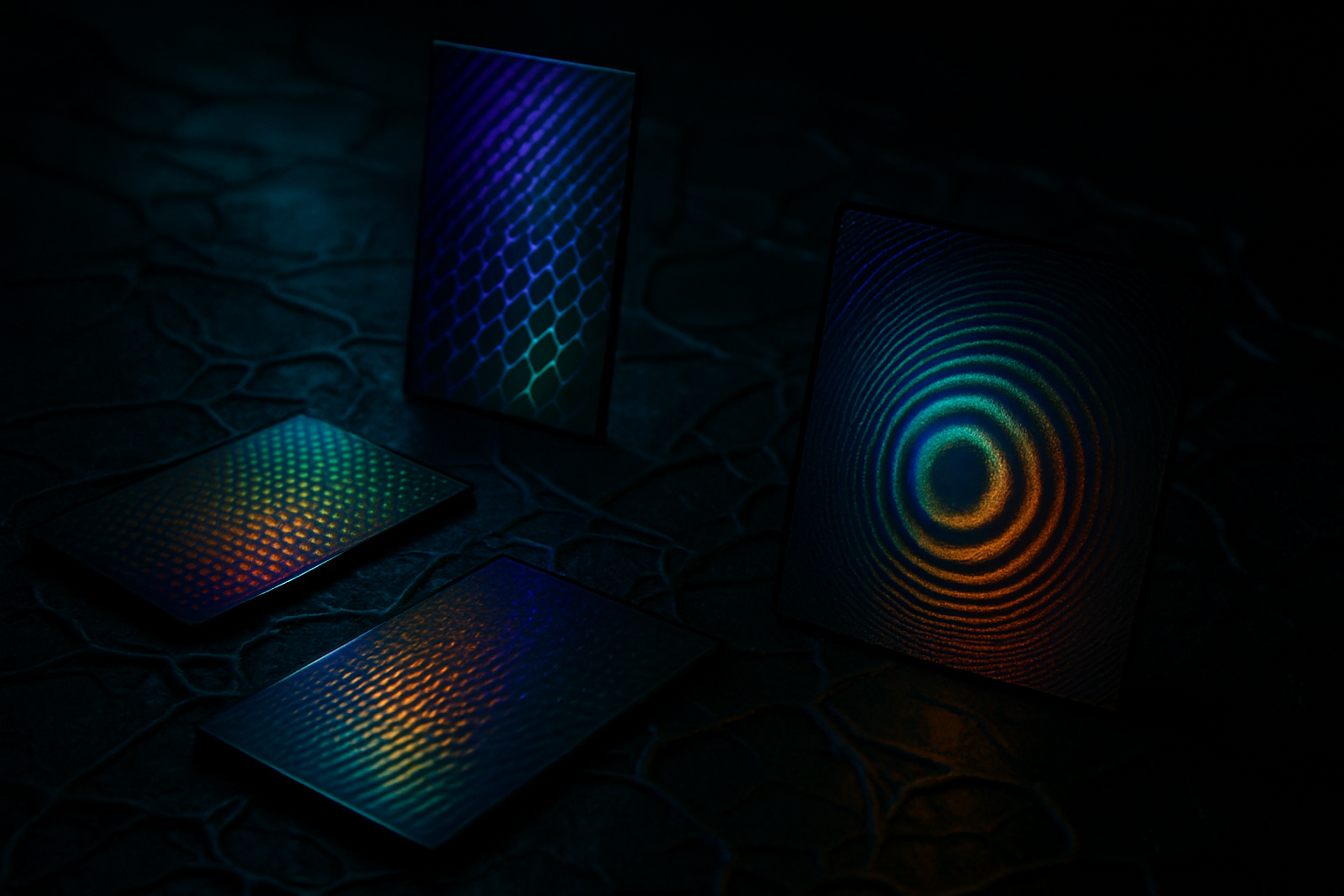
Revolutionizing Edge Computing with Optical Metasurfaces for Vision Processing
The rapid evolution of edge computing has brought us to the brink of a new paradigm, where processing occurs at the data source, reducing latency and improving efficiency. One of the most exciting developments in this space is the integration of optical metasurfaces for vision processing, promising a significant leap in how we handle visual data at the edge.
Understanding Optical Metasurfaces
At the heart of this technological breakthrough lies the concept of optical metasurfaces. These are artificially engineered surfaces capable of manipulating light in ways traditional optics cannot. By controlling the phase, amplitude, and polarization of light, optical metasurfaces enable compact, lightweight, and highly efficient optical systems. Unlike conventional lenses, which rely on the curvature and thickness of glass, metasurfaces use subwavelength structures to achieve desired optical effects. This translates to a reduction in size and weight—critical for edge devices that require mobility and compactness.
How Optical Metasurfaces Work
Optical metasurfaces consist of an array of nanoantennas that interact with incoming light. By adjusting the geometry and arrangement of these antennas, we can tailor the optical response of the surface. This flexibility allows metasurfaces to implement complex optical functions, such as focusing, imaging, and holography, all within a single layer. The ability to perform these functions without bulky components is what makes metasurfaces a game-changer for edge computing, particularly in vision processing applications.
Vision Processing on the Edge
Vision processing involves analyzing and interpreting visual data, often necessitating significant computational resources. Traditionally, this processing is done on powerful centralized servers, necessitating data transfer from the edge to the cloud—a process fraught with latency, bandwidth, and privacy concerns. By incorporating optical metasurfaces directly into edge devices, we can process visual data at the source, mitigating these issues.
Architecture and Implementation
Integrating optical metasurfaces into edge devices involves a novel architecture where the metasurface acts as both a sensor and a processor. The light, once manipulated by the metasurface, is directly converted into electrical signals that can be analyzed by machine learning models. This integration streamlines the processing pipeline, reducing the need for additional hardware and simplifying the overall system architecture.
import numpy as np

# Simulating a simple metasurface behavior using numpy
# Assuming metasurface designed for phase modulation

# Define the metasurface parameters
wavelength = 1550e-9  # Wavelength of light in meters
size = (100, 100)  # Size of the metasurface in elements
phase_modulation = np.random.rand(*size) * 2 * np.pi  # Random phase modulation

# Function to simulate light passing through the metasurface
def simulate_metasurface(input_wavefront):
    return input_wavefront * np.exp(1j * phase_modulation)

# Example wavefront
input_wavefront = np.ones(size)

# Output after passing through metasurface
output_wavefront = simulate_metasurface(input_wavefront)
The above code snippet illustrates a basic simulation of how a metasurface might modulate the phase of an incoming wavefront. In practical applications, this modulation would be designed to optimize for specific vision processing tasks, such as object detection or depth estimation.
Trade-offs and Challenges
While optical metasurfaces offer remarkable benefits, they come with trade-offs and challenges. The fabrication of these surfaces requires precision at the nanoscale, which can be costly and technologically demanding. Additionally, designing metasurfaces that can handle a wide spectrum of light and perform multiple functions simultaneously is non-trivial.
Another challenge lies in the integration with existing electronic systems. The transition from optical to electrical signals must be efficient to maintain the advantages of metasurface processing. This requires developing new materials and detection systems that can work seamlessly with metasurfaces.
Future Prospects
The potential applications of optical metasurfaces in edge computing are vast. From autonomous vehicles to smart cameras and IoT devices, these surfaces can revolutionize how visual data is processed and interpreted. As fabrication techniques improve and costs decrease, we can expect to see widespread adoption of this technology, leading to smarter, more efficient edge devices.
Key Takeaways
- Optical metasurfaces represent a significant leap forward in edge computing, enabling efficient vision processing by manipulating light at the source.
- These surfaces offer advantages in size, weight, and functionality over traditional optical systems, making them ideal for mobile and compact devices.
- Despite challenges in fabrication and integration, the future of optical metasurfaces is promising, with potential applications across various industries.